Luxury hotel glassware is becoming a strategic topic as the EU plastic shift reshapes premium hospitality.
Why the EU Plastic Shift Is Bigger Than a Ban
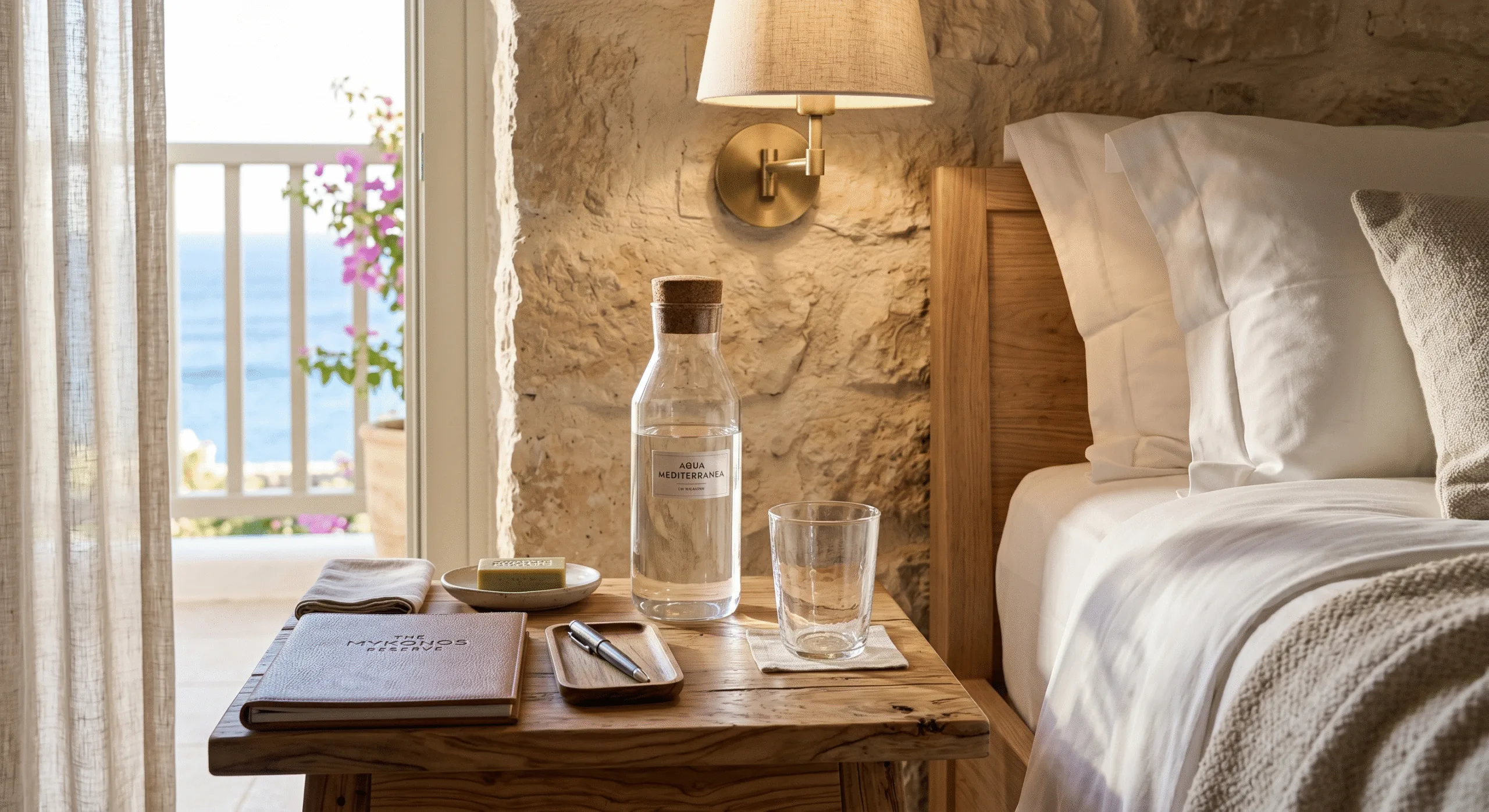
Luxury hotels rarely lose guests because of one plastic bottle.
They lose aura when small cheap signals accumulate.
Many hospitality teams still interpret plastic regulation as a simple shopping task:
Plastic out. Paper in.
But the European direction is broader than that.
Policy momentum increasingly focuses on reducing the impact of single-use products and accelerating circular economy models. That means the real question is no longer:
What should replace plastic?
It is:
Which operating system reduces waste while preserving premium experience?
For luxury hotels, this is not only a compliance issue. It is a brand decision.
Why Cheap Substitutes Create Brand Risk for Luxury Hotels
In luxury hospitality, perception is a KPI.
Guests form impressions in seconds, often through small touchpoints:
- the feel of weight and balance
- the clarity under warm lighting
- the sound of glass on a table
- the visual language of the tray or tabletop
- the sense of permanence versus disposability
A low-quality substitute can quietly undo expensive investments in interior design, service training, and brand storytelling.
This is why luxury hotel glassware is becoming a strategic purchasing category across Europe.
And when substitutes fail under daily operations, the hidden costs appear fast:
- breakage
- poor presentation
- staff frustration
- inconsistent guest experience
- repeat purchasing cycles
Cheap replacements often become expensive decisions.
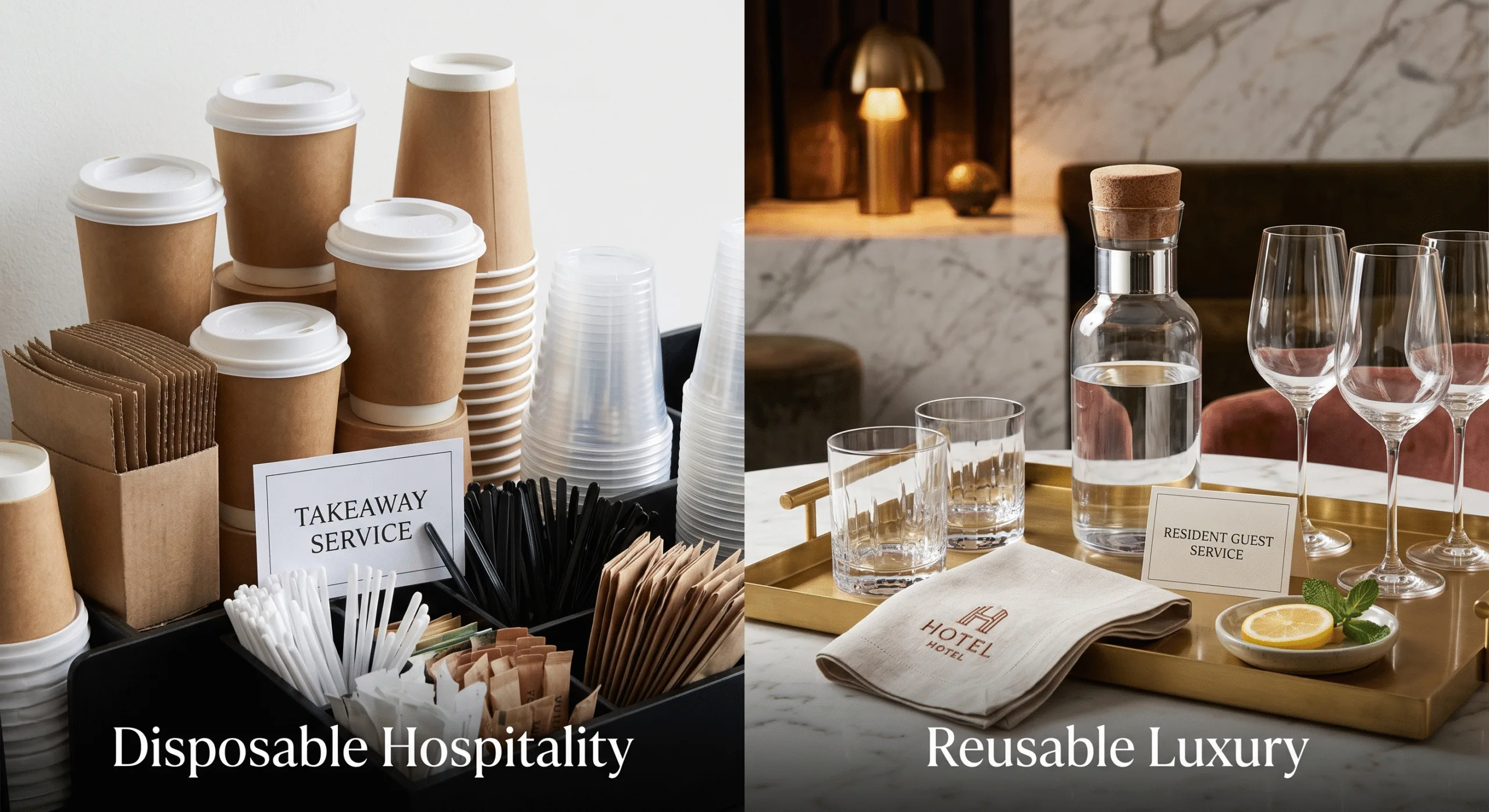
What EU Regulators Reward in Practice
Across Europe, the direction of travel is increasingly clear.
The strongest long-term solutions are often those that deliver:
- reduced single-use volume, not only material substitution
- repeatable systems across multiple properties and teams
- durable solutions that survive hospitality operations
- guest-visible improvements that reinforce sustainability credibility
- lower waste over time through reuse models
For premium hospitality brands, these priorities often align with operational excellence.
Founder Takeaway: Choose System Integrity First
For owners, founders, and hotel leadership teams, the decision rule is simple:
Prioritise solutions that survive real operations and still read as luxury at the guest touchpoint.
If a product looks sustainable but feels disposable, it weakens the message.
If a solution performs operationally but damages aesthetics, it weakens the brand.
The best answer protects both.
Where Luxury Hotels Should Start First
A practical low-risk path is to begin with high-frequency, guest-visible touchpoints:
- in-room bedside water sets
- restaurant water service
- spa and wellness hydration stations
- bar glassware for signature drinks
- breakfast table beverage presentation
Then validate:
- durability
- housekeeping practicality
- guest reaction
- visual consistency
- replacement economics
Scale only after the system works.
Final Thought: A System Shift, Not a Material Swap
The EU plastic shift is not simply asking luxury hotels to change materials.
It is asking them to rethink visible hospitality systems.
For hotel owners reviewing 2026 guest experience upgrades, reusable glass touchpoints may be one of the simplest visible wins.
Small details often create the strongest premium signals.
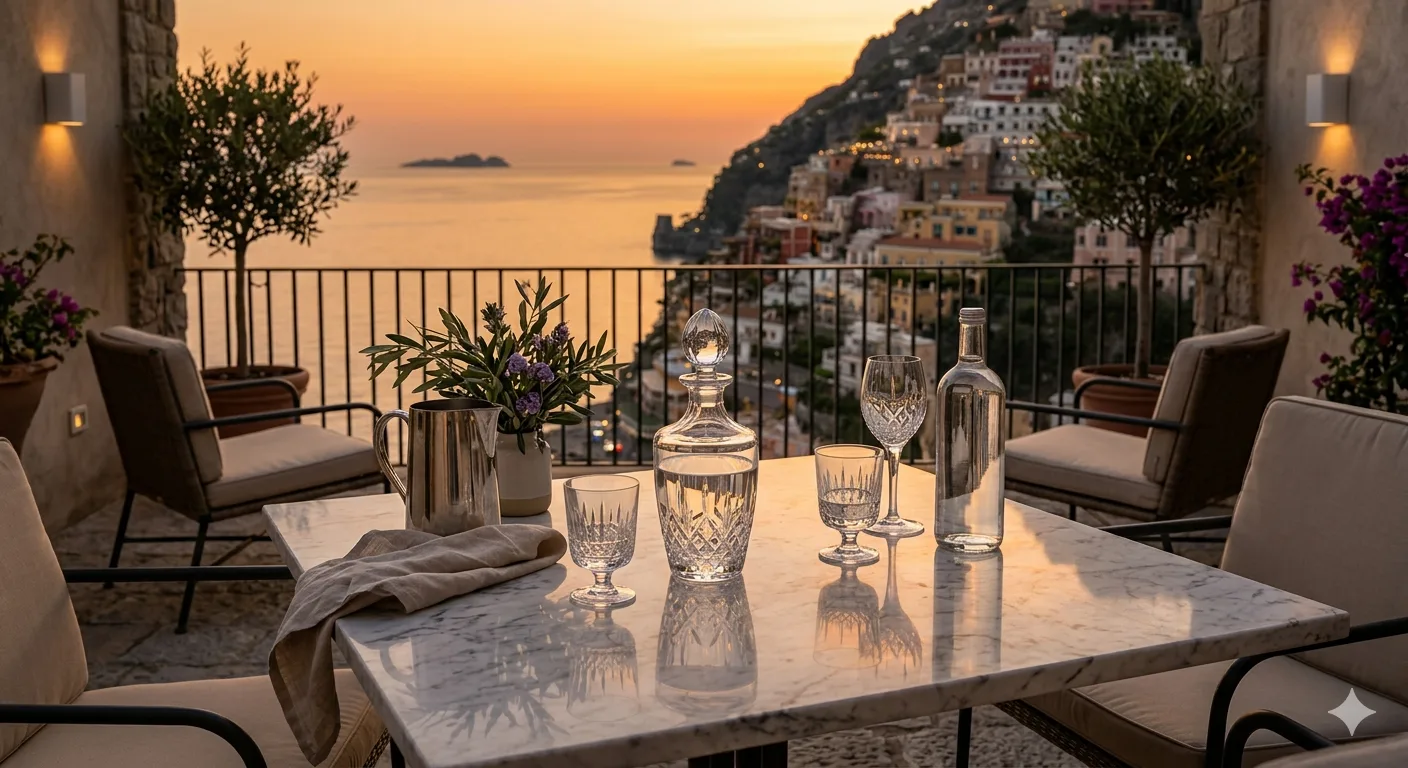
Luxury is often remembered through the smallest visible details.
For many premium properties, this creates an opportunity:
Replace disposable signals with lasting ones.
Not a material swap.
A system shift.
For premium hospitality projects requiring OEM sourcing or custom guest glassware, Eukaglass welcomes discussion.
References
- European Commission — Single-use plastics overview (SUP Directive context): https://environment.ec.europa.eu/topics/plastics/single-use-plastics_en
- Booking.com Sustainable Travel Report: https://www.booking.com/sustainable-travel