Introduction: Luxury Guests Judge Sustainability in Seconds
Luxury hotels are investing heavily in sustainability. Luxury hotel sustainability is no longer only an operations issue. But many guests judge it in seconds—often before they have read a single label, card, or sustainability policy page.
That is because guests rarely experience sustainability as a statement. They experience it through materials, rituals, and consistency:
- the weight of a bedside water bottle
- the feel of a glass in hand
- the presentation of tabletop service
- whether the same quality appears across the entire stay
When the “sustainable” choice feels lighter, cheaper, or inconsistent, guests do not think eco. They think downgrade.
This is why sustainability in luxury hospitality is increasingly a design and experience topic—not just a communications topic.
The Visibility Era of Luxury Hospitality
We are now in a visibility era.
Platforms, reviews, and social sharing amplify what guests can easily describe, photograph, and remember.
A guest may never mention backstage waste reduction, procurement strategy, or waste audits.
But guests will remember—and sometimes post about:
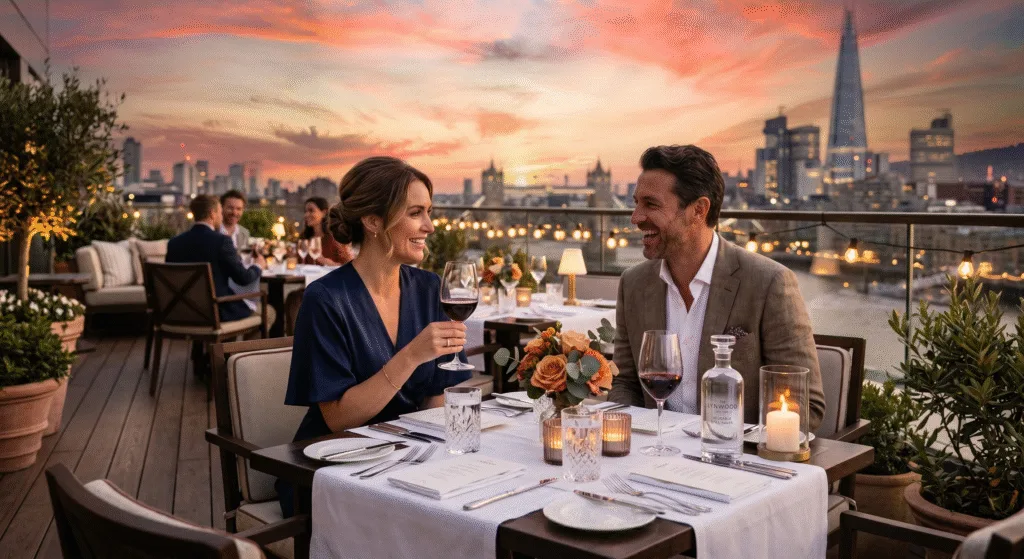
- the elegance of the in-room water setup
- the quality of restaurant serviceware
- the feel of real materials over disposable substitutes
- whether sustainability choices felt premium—or compromised
In other words:
Guests remember what they can feel.
Platforms amplify what they remember.
In our next article, we’ll explore how platforms turn these signals into proof points.
Guest Expectations Have Already Shifted
Booking.com’s 2023 sustainability travel research suggests guest expectations are already mainstream:
- 76% want to travel more sustainably
- 43% are willing to pay more for certified sustainable options
For luxury hotels, this means sustainability is no longer a niche preference.
It is becoming part of how guests screen value—and how they justify paying a premium.
In other words, sustainability is moving from nice to have to part of premium value.
But there is a catch:
Luxury guests do not reward sustainability that feels like sacrifice.
They reward sustainability that feels like quiet, confident quality.
What Sustainability Signals Really Are
A sustainability signal is a guest-perceivable detail that communicates values through experience.
It is not a claim. It is a cue.
In practice, these signals answer two silent questions:
- Is this sustainable (or at least less wasteful)?
- Does this still feel premium?
Hotels that answer both questions—without making the guest think too hard—tend to win.
With that in mind, not every sustainability investment is equally visible to guests.
The Sustainability Signal Hierarchy
If the goal is to protect luxury perception while advancing sustainability, prioritize signals in this order:
1. High-Frequency Touchpoints
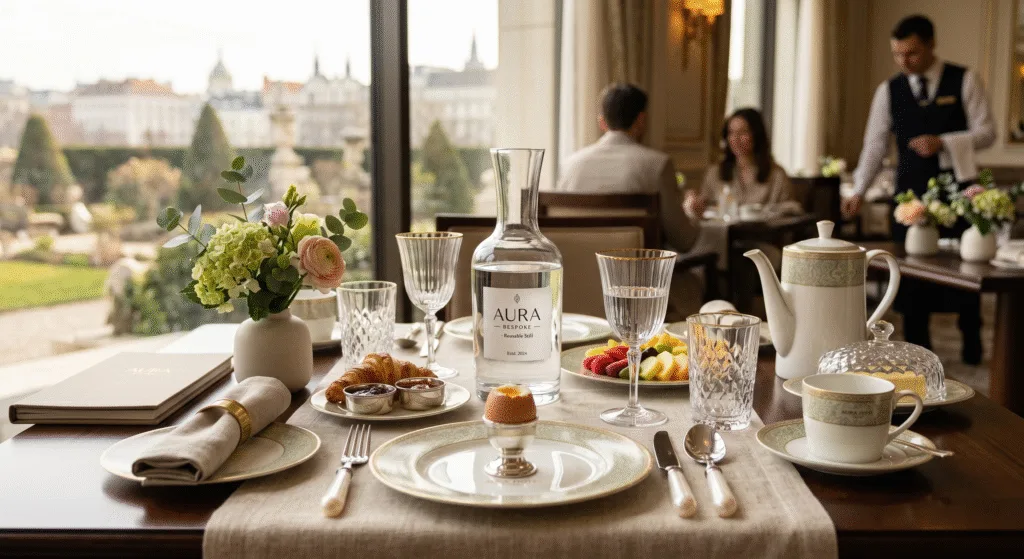
These are the moments guests use every day, often multiple times:
- bedside water sets (bottle + glass + tray)
- in-room amenities and dispensers
- breakfast table settings and water service
These shape baseline perception.
They are repeated, tactile, and easy to compare across hotels.
If they feel premium, guests assume the hotel is thoughtful.
If they feel cheap, guests assume the hotel is cutting corners—even if the intention was sustainability.
The same logic applies to linens, packaging, stationery, and any object guests touch daily.
Design principle: upgrade the hand feel and visual language, not only the material.
2. Ritual Moments
These are the moments guests emotionally remember:
- bar presentation and signature serves
- wine service and glassware choice
- restaurant tabletop rituals
These moments are social, memorable, and often photographed.
A sustainable change here can become a brand-strengthening detail—or a “why did they do that?” moment.
Design principle: sustain the ritual. Do not remove the experience.
3. Stay-Wide Consistency
Luxury groups gain strength when premium signals are repeatable across rooms, departments, and properties.
Guests notice when standards travel well.
Consistency is also a sustainability signal.
It implies planning, discipline, and brand intent.
Inconsistency implies patchwork sustainability—a mix of premium and compromise.
Operating principle: define what good looks like, then make it repeatable.
Common Pitfalls: When Sustainability Becomes a Downgrade Story
Many sustainability initiatives fail at the experience layer.
Common patterns include:
- Eco becomes synonymous with lightweight. Greener options may feel less premium.
- Materials clash with the room design. One mismatched detail can weaken cohesion.
- Operational friction becomes guest friction. Cleaning, replenishment, or breakage issues become visible.
- Messaging is louder than experience. A sustainability card cannot fix a budget-feeling bedside setup.
The goal is not to make sustainability invisible.
It is to make it feel inevitable—as if the premium choice was always the right one.
Founder / Owner Takeaway
Many hotels still treat sustainability as a communications topic.
Luxury guests often treat it as an experience topic.
That difference matters.
The right upgrade strengthens perception.
The wrong substitute becomes a downgrade story—shared through reviews, photos, and word of mouth.
If you are deciding where to invest, start with what guests can touch, use, and remember.
Then scale what works across the portfolio.
Final Thought
In luxury hospitality, guests do not only ask:
“Is this sustainable?”
They also ask—silently:
“Does this still feel premium?”
When sustainability becomes standard, luxury is judged by how it feels.
Source
Booking.com Newsroom — 2023 Sustainability Travel Research