Introduction: Sustainability Is Perceived, Not Just Announced
Luxury guests care about sustainability—but they judge it through experience, touch, and perception, not policy pages or certification badges.
In the post-plastic era, premium pricing only holds when sustainability feels like quality, is tactile, and repeatable—clearly expressed in moments such as:
- the weight and clarity of a bedside water bottle
- the tactile impression of glassware at breakfast
- the elegance of signature bar rituals
A “green” upgrade that looks cheap or inconsistent can quietly erode perceived value. The goal is simple: make sustainability inseparable from premium experience.
1️⃣ Why Sustainability Alone Doesn’t Justify Premium Pricing
Guests don’t “buy” a sustainability claim—they buy the feeling of refinement, care, and consistency.
Sustainability only supports higher rates when it shows up as visible, tangible, and repeatable quality, for example:
- Materials that feel substantial and refined
- Light and transparency that look intentional
- Ritual and service moments that delight
If the guest cannot see it, feel it, and experience it consistently, it doesn’t protect price.
2️⃣ Guest Expectations Are Already Mainstream
Sustainability is no longer niche—it’s part of premium value. Booking.com (2023) found:
- 76% of travelers want to travel more sustainably
- 43% would pay more for certified options
For luxury hotels, the advantage isn’t louder messaging—it’s credible, tangible cues guests can experience and repeat in reviews.
Takeaway: Sustainability becomes revenue-positive when it’s felt as an upgrade, not announced as an initiative.
Source: https://news.booking.com/cost-vs-conscience-bookingcom-delves-into-the-dilemma-dividing-sustainable-travel-in-2023/
3️⃣ The Premium Evidence Chain: Touchpoints, Rituals, Operations
Premium claims are strongest when protected by a chain of guest-visible proof—what we call the Premium Evidence Chain:
Tier 1 — High-Frequency Touchpoints
These shape baseline perception:
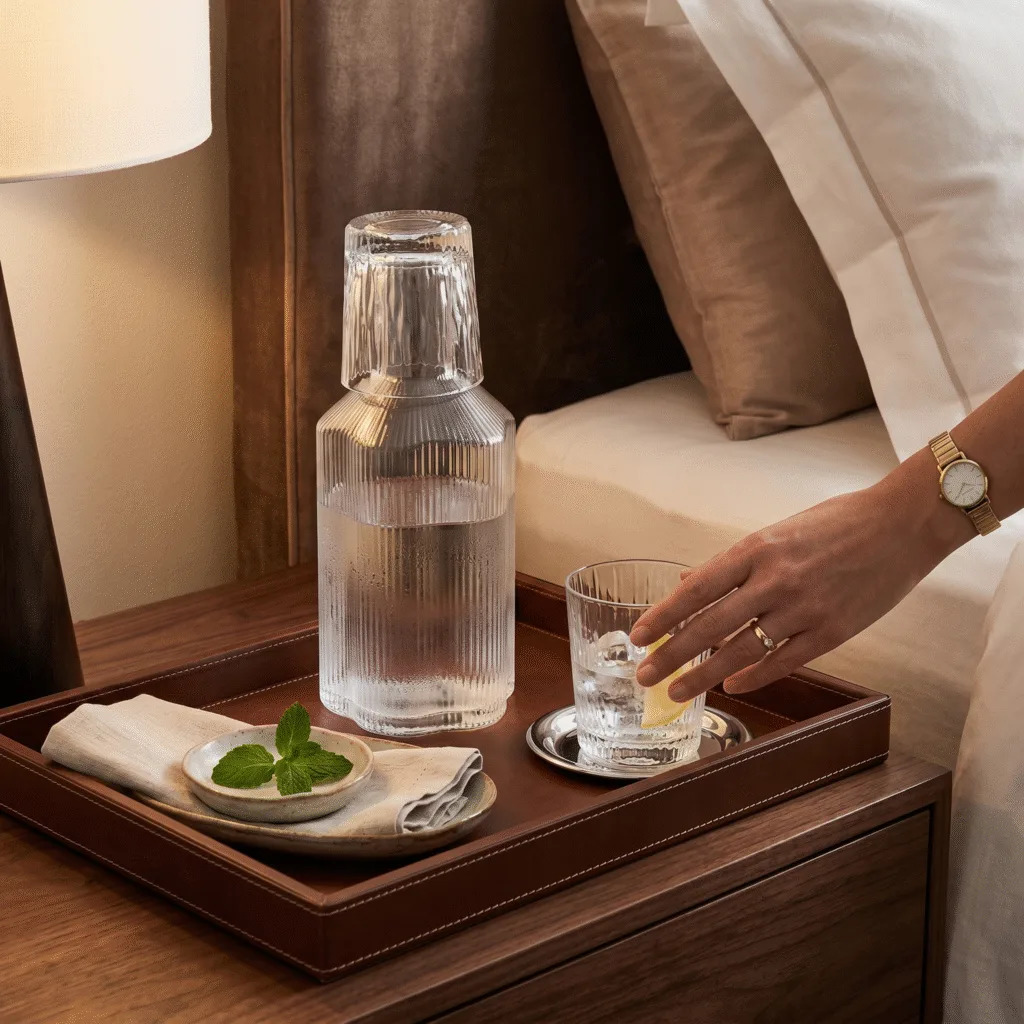
- Bedside water sets (bottle + glass + tray)
- In-room amenities and dispensers
- Breakfast table settings
Design rule: Upgrade hand-feel and visual language, not just the material.
Mini checklist for premium proof points:
- Weight & balance (not flimsy)
- Clarity & finish (not cloudy / cheap shine)
- Sound (the “ring” of quality)
- Consistency across rooms
- Presentation (tray, placement, lighting)
- Serviceability (easy to clean, store, and replenish)
Alt text: Luxury bedside water set showcasing premium feel and sustainable design
Tier 2 — Ritual Moments
Naturally social, memorable, and platform-friendly:
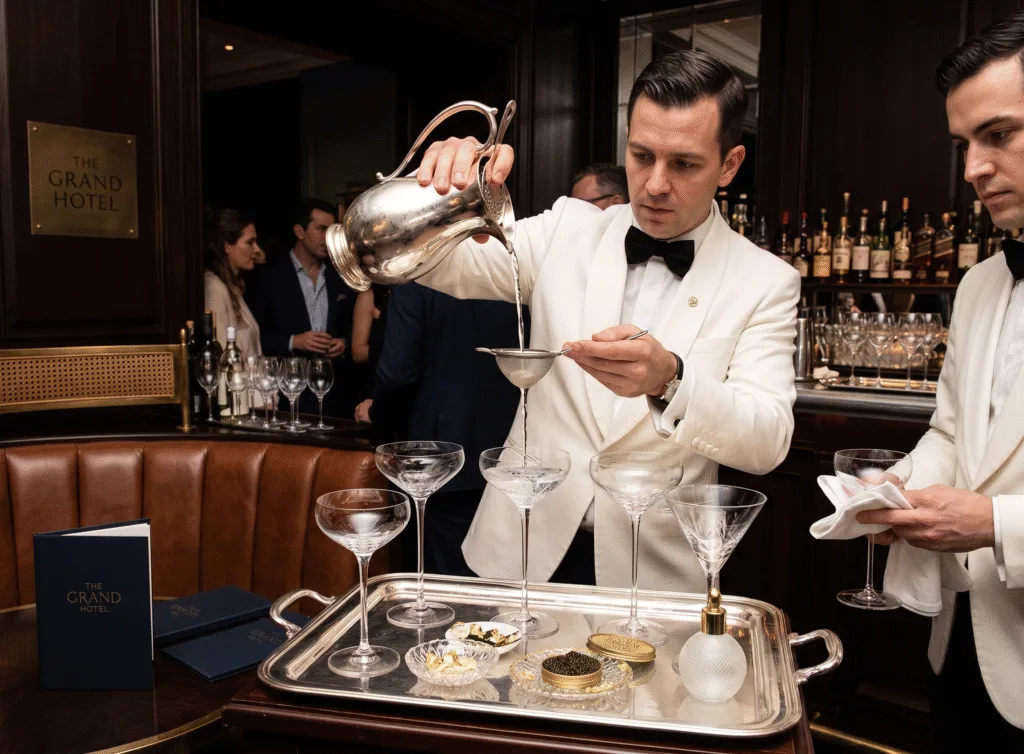
- Bar presentation and signature serves
- Wine service and glassware choice
- Restaurant tabletop rituals
Design rule: Sustain the ritual—don’t remove it.
A sustainable change here can become a brand-strengthening detail—or a “why did they do that?” moment.
Tier 3 — Portfolio Consistency
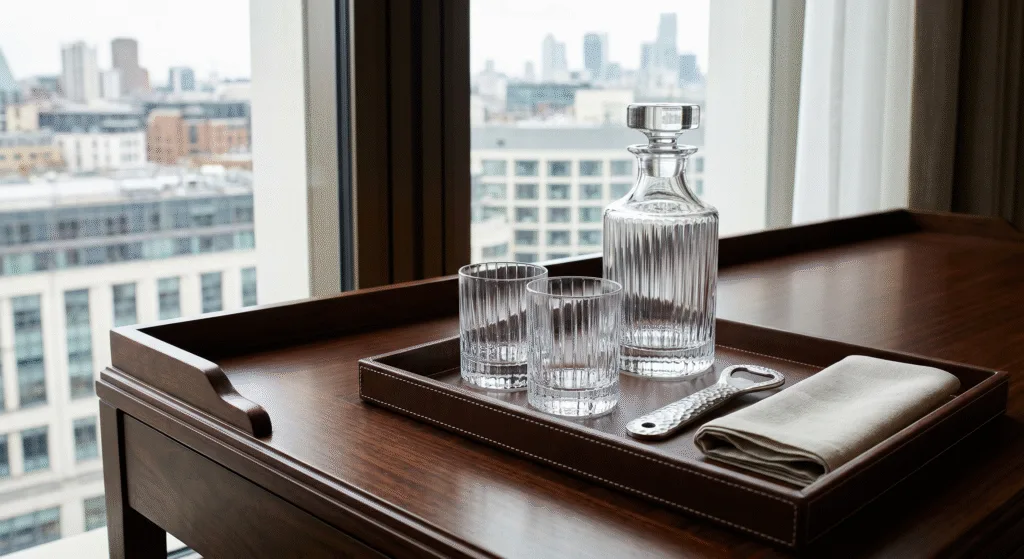
Consistency turns details into brand standards:
- Repeatable across rooms, departments, and properties
- Standardize visual language and service ritual
- Maintain consistent premium feel across locations
Design rule: Consistency signals planning, discipline, and brand intent. Inconsistency reads as compromise.
4️⃣ Founder / Owner Takeaway: The Replacement Is the Reputation
The wrong substitute can silently downgrade perception.
The right upgrade becomes a visible proof point—strengthening luxury cues and sustainability simultaneously.
Start with what guests can touch, see, and remember, then standardize it so it becomes repeatable—in experience and across the portfolio.
Final Thought
Luxury guests don’t only ask:
“Is this sustainable?”
They also ask—silently:
“Does this still feel premium?”
When sustainability becomes standard, luxury is increasingly defined by how it feels.
Source
Source:
Booking.com Sustainable Travel Research (2023)
If your hotel group is reviewing premium guest touchpoints in the post-plastic era, Eukaglass can support custom glass solutions for bedside, dining, and bar service.
Contact us to discuss project ideas.