
One of the most common misunderstandings in product development is this:
A successful prototype does not automatically mean a successful production run.
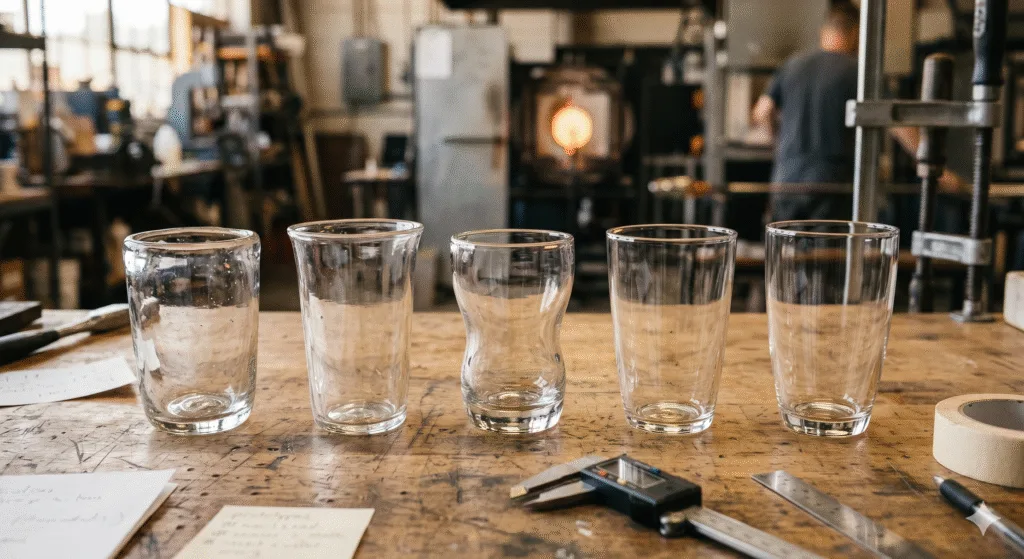
A factory may produce one beautiful sample. The product looks right. The proportions feel right. The customer approves it. Everything seems ready.
But producing that same result hundreds, thousands, or tens of thousands of times is a completely different challenge.
That is the difference between:
Can we make it?
and
Can we make it consistently?
Many projects succeed at the first question—and struggle with the second.
Whether you’re a product team, a buyer, or a manufacturer scaling a new design, this is often where the most expensive surprises begin.
What a Prototype Actually Proves: Feasibility
The primary purpose of a prototype is to prove feasibility. It answers questions such as:
- Can the shape be produced?
- Does the product function as intended?
- Does the design look right in the real world?
- Does the user experience match expectations?
A successful prototype demonstrates possibility. It proves that the product can exist.
What it does not prove is whether the same result can be reproduced consistently during production.
What Production Proves: Repeatability
Mass production introduces a completely different set of variables. Instead of producing one sample, the factory must reproduce the same outcome repeatedly.
Now the questions change:
- Can wall thickness remain consistent?
- Can dimensions stay within tolerance?
- Can color remain stable across batches?
- Can yield remain economically viable?
- Can the process perform consistently across different operators and shifts?
A prototype validates feasibility.
Production validates repeatability.
A prototype shows what is possible. Production proves what is repeatable—at scale.
Why Prototype Quality Often Doesn’t Scale
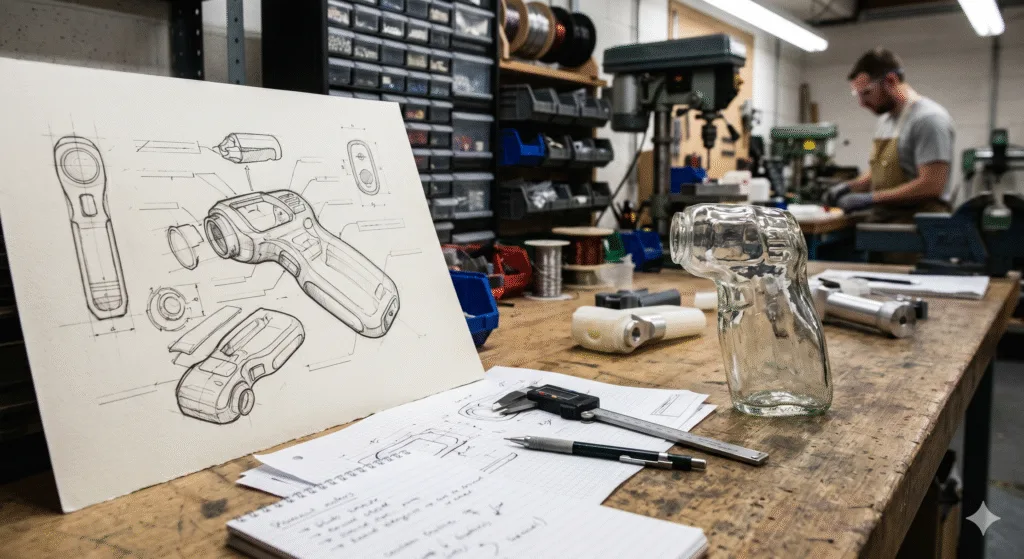
Prototype success is often achieved under conditions that are very different from production conditions.
For example, prototypes may involve:
- The most experienced technician or craftsperson
- Extra time per piece with little pressure on speed
- Manual selection, rework, and “best-of” picking
- A highly controlled material batch
- A subjective approval standard
Production is different. Production is a system, not a one-time achievement.
A production system must deliver stable results under real constraints:
- Staffing
- Throughput targets
- Shift changes
- Material variation
- Standardized quality control
In many handcrafted products, drawings often become an implicit approval standard.
Teams compare a physical sample directly against the theoretical geometry shown in a drawing and expect every curve, transition, or thickness to match perfectly.
In reality, handmade manufacturing introduces natural process variation. Small differences in curvature, rim finishing, wall-thickness distribution, or visual symmetry may be acceptable in real use—but become highly visible when compared against an idealized drawing.
This is why successful projects typically define tolerances, reference samples, and acceptable variation ranges early in the development process, rather than relying on a drawing alone as a pass/fail standard for production.
That is why a prototype can look perfect while the production version struggles with consistency, yield, cost, or lead time.
The Real Gap: Best Effort vs Process Capability
This is the part many teams underestimate.
A prototype is often a capability demonstration—a best-effort result under favorable conditions.
Production requires process capability.
A manufacturing process must hold up:
- Across multiple operators
- Across different days and shifts
- Across raw material batches
- At target volume
- At target cycle time
- With predictable yield, cost, and lead time
That is why a product can look perfect as a sample, yet become unstable, inconsistent, or expensive when scaled.
Why Handmade Manufacturing Is Especially Sensitive
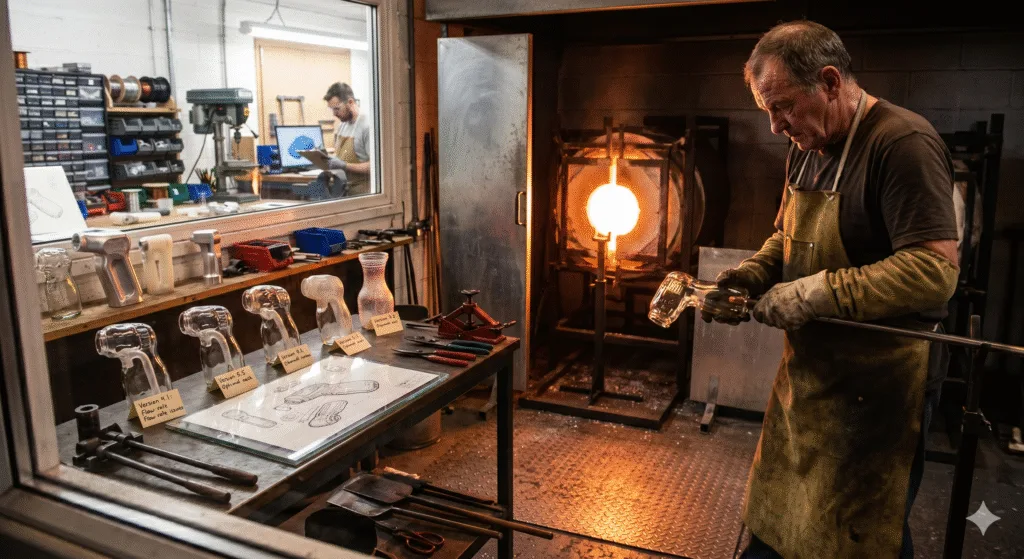
This gap becomes even more important in handmade or craft-based manufacturing.
Take handmade glassware as an example.
A prototype may be produced by the factory’s most experienced craftsperson, and the result can be exceptional.
But production success depends on something different:
Can the same quality be reproduced consistently across multiple operators, production days, and manufacturing batches?
In handmade production, details that appear minor during sampling can become major risk factors during scaling, such as:
- Ultra-thin rims
- Highly controlled wall thickness
- Complex curves and transitions
- Decorative treatments (etching, painting, gilding, special finishes)
- Tight visual tolerances (symmetry, roundness, clarity, consistency)
A feature can be technically achievable—and still create challenges in consistency, yield, lead time, and cost when scaled.
This does not mean the design is wrong.
It means manufacturing reality is different from prototype reality.
The Hidden Difference Between “Possible” and “Repeatable”
Many teams unintentionally treat prototype approval as production approval.
But these are two separate milestones.
A prototype asks:
Can this be made?
Production asks:
Can this be made repeatedly, economically, and predictably?
The gap between those two questions is where many manufacturing problems appear.
And the more handcrafted or specialized a product becomes, the larger that gap can be.
Questions to Ask Before You Scale from Prototype to Production
Instead of asking only:
“Does the sample look good?”
Ask questions that reveal repeatability risk.
Validate Repeatability (Not Just One Perfect Run)
- Has this result been reproduced across multiple runs—not just once?
- Can it be achieved by more than one operator or team?
- What will change between prototype and production?
- Will tooling, staffing, cycle time, or quality control methods change?
Define Tolerances and Acceptable Variation
- What tolerance range is realistic for production?
- What level of variation is acceptable?
- How will variation be evaluated?
- Will approval be based on measurements, reference samples, or visual standards?
Pressure-Test Yield, Cost, and Lead Time
- What is the expected production yield (reject/rework rate)?
- What design details create the highest production risk?
- What factors are most likely to increase cost or lead time?
- What compromises could improve stability without changing the design intent?
These questions often reveal more about long-term success than the sample itself.
Final Thought
A perfect prototype is an important milestone.
But it is only the beginning of the manufacturing journey.
A prototype proves possibility.
Production proves repeatability.
And in manufacturing, repeatability is often the more difficult achievement.
The earlier teams discuss repeatability, tolerances, and process capability, the fewer surprises tend to appear after production begins.
For product teams, that means defining repeatability tests before locking the design.
For buyers, it means aligning on tolerances and acceptable variation before placing the purchase order.
For manufacturers, it means building a process that performs across operators, shifts, and batches—not just once.